
5 Ways to Assess Product Quality Before Buying
Last Updated: October 28, 2026
Quick Summary
To assess product quality before buying, check the materials and construction details, read reviews for repeated flaws, compare specifications against your actual use, review the warranty and return terms, and run a short pre-purchase checklist. Specific details like material grade and thickness are a stronger quality signal than promotional wording.
- Look for specific material grades or thickness rather than vague terms like premium.
- Skip star averages and look for repeated serious flaws across recent written reviews.
- Compare only the three specifications that matter most for your space and use.
- Confirm warranty length, coverage, and return shipping terms before paying.
- If two or more checklist items are missing, keep looking before you buy.
Table of Contents
- Why Product Quality Is Hard to Judge Online
- 1. Check the Materials and Construction Details
- 2. Read Product Reviews the Right Way
- 3. Compare Specifications Against Your Actual Use
- 4. Look at Warranty and Return Policy Terms
- 5. Run a Pre-Purchase Quality Checklist
- Choosing Durable Pet Travel Bowls as a Quality Test Case
- Your Next Step: Shop the Strodix Collection
- Frequently Asked Questions
Buying products online means you usually can't touch, test, or inspect them before they arrive. That gap makes product quality one of the hardest things to judge from a screen. The good news is that a few specific checks can reveal most of what matters before you pay. Here are five ways to assess product quality before buying, with a worked example using durable pet travel bowls.
Why Product Quality Is Hard to Judge Online
Product photos are polished, and descriptions are written to sell. Neither tells you how an item will hold up after months of use. The US Federal Trade Commission has long warned consumers to look past marketing claims and check the details that matter, since advertising is designed to highlight strengths. Shift attention from the picture to the specifications, the wording of the reviews, and the seller's commitments.
1. Check the Materials and Construction Details
Start with what the product is made of. Material tells you more about durability than almost any adjective in a listing. Stainless steel generally resists rust and odors better than plastic or wood, while thin metal or cheap coatings tend to wear out sooner. Look for the exact grade or thickness rather than vague terms like "premium."
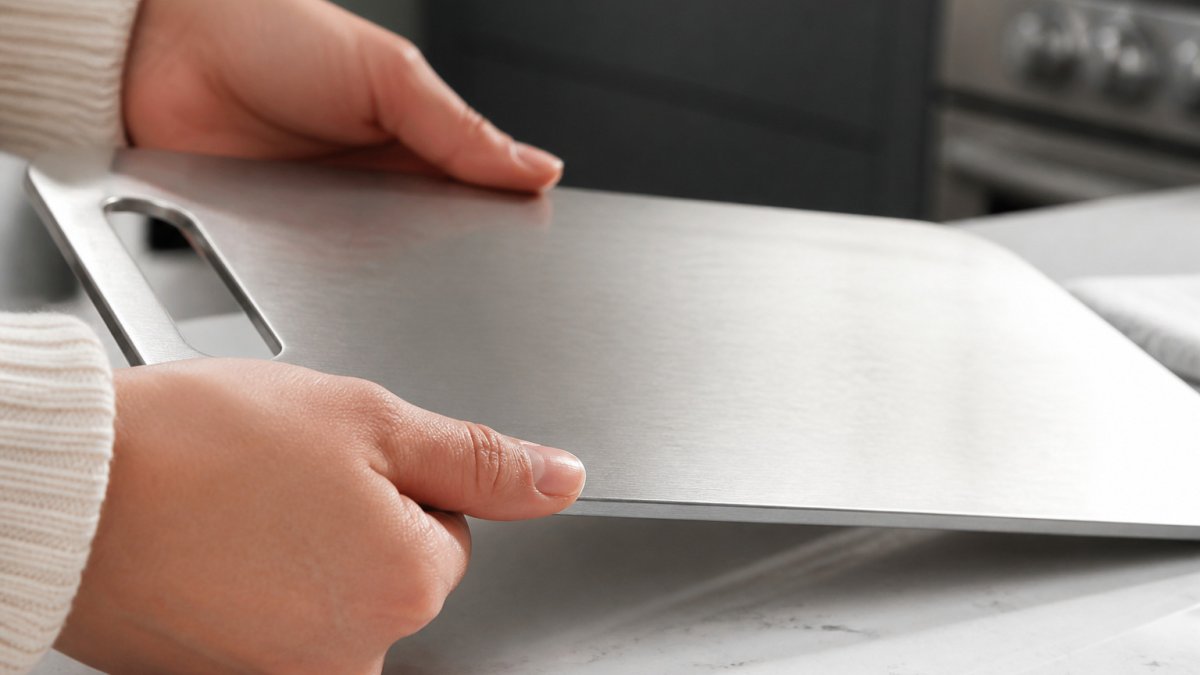
Next, examine the construction. Check whether joints are welded or glued, whether handles are attached securely, and whether removable parts lock in place. For example, our Premium Large Stainless Steel Cutting Board lists 304 stainless steel, a specific detail you can compare across options. Specific numbers are a stronger quality signal than promotional language.
2. Read Product Reviews the Right Way
Reviews are useful, but only when you read them with a plan. Learn how to tell whether online product reviews are real before you rely on them. Skip the star average and look for patterns in the written feedback. Several reviews mentioning the same flaw, such as a lid that cracks or a hinge that loosens, is a warning sign worth taking seriously.
Pay attention to reviews from people who used the product for a long time. A review written the day after delivery rarely reveals durability problems. Also be cautious when reviews are all five stars and use similar wording, since that can point to unreliable feedback. A balanced set of reviews, with honest criticism and specific use cases, is the most trustworthy signal.
3. Compare Specifications Against Your Actual Use
A product can be high quality and still be wrong for you. Measure your space, your frequency of use, and your load before comparing specifications. A dish drying rack designed for a compact counter may be ideal for a small apartment and frustrating for a family kitchen.
Write down the three specifications that matter most for your situation, such as capacity, size, or pressure rating. Then compare only those across products. Ignoring extra features keeps you focused on performance you will actually use.
4. Look at Warranty and Return Policy Terms
Check whether a seller provides warranty and return policy terms, including how long coverage lasts, what it covers, and whether you must pay return shipping. Find out whether online shopping is safe with a debit card before you pay.
Premium Large Stainless Steel Cutting Board - Versatile 304 Chopping Board →
Before paying, confirm how payment is handled and what protections apply. It helps to understand your card issuer's dispute process (How can I get a refund on a product or service I purchased with my credit card?).
5. Run a Pre-Purchase Quality Checklist
Before you click buy, run through a short checklist:
- Materials and thickness are stated specifically
- Construction details (joints, handles, locks) are described
- Recent reviews show no repeated, serious flaw
- Key specifications match your space and use
- Warranty length and return terms are clearly listed
- The seller answers product questions directly
If you can check every box, the purchase carries much lower risk. If two or more are missing, keep looking.
Before you click buy, the checklist below condenses the six checks covered in this article into one scannable reference. Compare it with a full beginner's online shopping checklist for more coverage.
| Check | What to confirm | Red flag |
|---|---|---|
| Materials | Specific grade or thickness is stated | Vague terms like "premium" |
| Construction | Joints, handles and locks are described | Parts left unexplained |
| Reviews | No repeated, serious flaw across recent reviews | Many identical five-star wordings |
| Specifications | Key specs match your space and use | Only promotional claims |
| Warranty | Coverage length and return terms are listed | Terms missing or unclear |
| Seller | Product questions get direct answers | No answers to questions |
Choosing Durable Pet Travel Bowls as a Quality Test Case
Pet travel bowls make a useful test case because they face real stress: they get dropped, squeezed into bags, and washed often. Start with materials. Stainless steel resists odors and cracking better than thin plastic, and a stated food-grade rating is a good sign. Check that the bowl has a sturdy base that won't tip, and that any collapsible design locks firmly when open.
For a full buying guide that covers these criteria in depth, see How to Choose Durable Pet Travel Bowls.
Your Next Step: Shop the Strodix Collection
Assessing quality is about asking the right questions before you buy, and it works for any category you shop. At Strodix, we curate our selection. Start with the Strodix collection to see how these criteria apply across our products, then shop with confidence.
Frequently Asked Questions
How can you tell if a product is good quality before buying?
Start with the materials and construction details in the listing. Look for specific named materials such as 304 stainless steel or galvanized steel rather than vague terms like premium or durable. Check stated thickness, weight, and dimensions, then compare them against similar items. Combine this with reviews and the return policy before you commit, since no single signal is conclusive on its own.
What should you look for when evaluating a product online?
Focus on four things: the materials and finish, the stated specifications, the warranty or return terms, and how the product is described in customer feedback. Be cautious of listings that repeat marketing adjectives without any measurements. Concrete details let you check claims against what you actually need.
How can customer reviews help you assess product quality?
Reviews are most useful when you read the lower-rated ones first and look for patterns. Look for patterns in reviewers' descriptions of rust, loose parts, or a shorter-than-stated size. Pay attention to reviews from people who used the product for the same purpose you plan to. Check whether reviews mention durability after months of use, since first impressions rarely reveal wear or defects.
Are expensive products always better quality?
No. Judge quality by the materials, build details, and specifications instead of price alone. Use price as one input, and verify quality with the other four checks before deciding.
