
Is Online Shopping Safe With a Debit Card?
Table of Contents
- Is Online Shopping Safe With a Debit Card? The Short Answer
- Debit Card vs Credit Card Online Security
- How Debit Card Fraud Affects Your Bank Account
- How to Protect Your Debit Card Online
- How to Check if an Online Store is Legitimate
- What to Do if Your Debit Card is Compromised
- Your Legal Protections and Liability Limits
- Frequently Asked Questions
Last Updated: October 18, 2026
Is Online Shopping Safe With a Debit Card? The Short Answer
Yes, is online shopping safe with a debit card? Generally it is with the right precautions, though debit cards offer fewer protections than credit cards.
Funds come directly from your bank account, so stolen card details give thieves access to your actual money, making debit card protection more critical.
The good news: federal law limits your liability for unauthorized transactions if you report them promptly.
Debit Card vs Credit Card Online Security
Debit cards: Funds are drawn directly from your bank account.
Credit cards: Funds come from the card issuer's credit line. You pay the bill later.
Both card types are protected under federal law.
With a debit card, fraudulent charges can drain your account instantly, causing overdraft fees or failed bill payments.
Credit cards often include additional perks:
- Extended fraud investigation periods (up to 60 days)
- Stronger zero-liability policies
- Better purchase protection for damaged or undelivered items
- Rewards on every purchase
Debit cards have advantages too:
- You spend only what you have (no debt)
- Lower fees for overdraft protection if set up correctly
- Direct access to your money
- Simpler budgeting for many people
The bottom line: credit cards offer more consumer protections for online shopping.
How Debit Card Fraud Affects Your Bank Account
Immediate effects:
Longer-term impacts:
Fraudulent transactions can disrupt your finances for weeks.
Repeated fraud on the same account can cause your bank to close it, since banks view multiple incidents as poor account security.
Why debit card fraud is riskier than credit card fraud:
With a credit card, the issuer investigates and you don't pay the fraudulent charges. Your actual money stays in your account.
How to Protect Your Debit Card Online
Protecting your debit card starts before you enter your card number. Most fraud stems from weak passwords, unsecured networks, or unverified websites, and these steps reduce your risk dramatically.
Verify the website before checkout
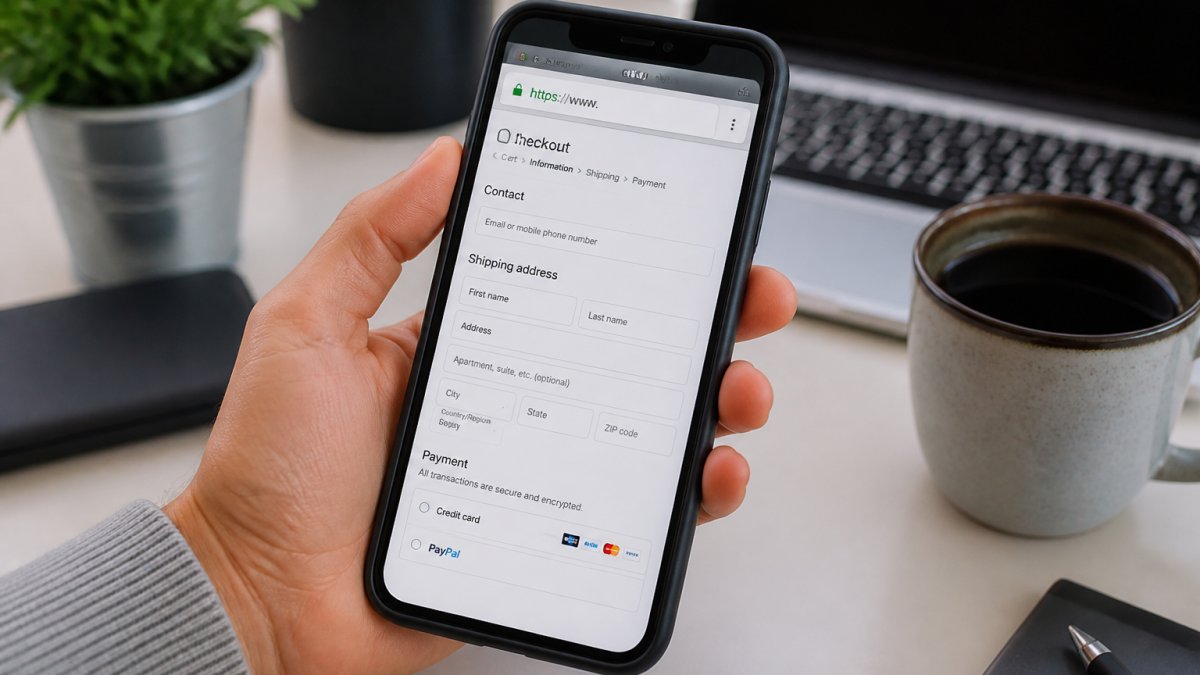
Before entering card details, confirm the website is legitimate and secure. Fraudsters create fake sites that look nearly identical to real ones and steal card numbers from shoppers who don't notice.
Check the URL carefully:
- Real websites use HTTPS (not HTTP). Look for the "s" at the end.
- The address bar shows a padlock icon on secure sites.
- The domain name matches the company (not a misspelling or variation).
- Avoid clicking links in emails. Type the website address directly into your browser instead.
Look for trust signals:
- Professional design and clear contact information
- Real customer reviews on independent review sites
- A physical address and phone number
- Privacy policy and return policy clearly posted
Red flags that signal a fake site:
- Poor grammar or spelling throughout
- Prices that seem too good to be true
- No contact information or customer service
- Requests to wire money or pay by gift card
- No clear return or refund policy
Use strong authentication and secure networks
Your password is your first line of defense. A weak password makes it easy for hackers to access your account and change your payment methods.
Create strong passwords:
- Use at least 12 characters
- Mix uppercase and lowercase letters, numbers, and symbols
- Avoid birthdays, names, or common words
- Use a different password for every website
- Consider a password manager to store them securely
Enable two-factor authentication (2FA):
- This adds a second verification step beyond your password
- You receive a code via text, email, or app
- Enter the code to complete login or transactions
- Even if someone steals your password, they can't access your account without the code
Avoid public Wi-Fi for shopping:
- Public networks (coffee shops, airports, hotels) are not encrypted
- Hackers can intercept your card details on public Wi-Fi
- Use your phone's hotspot or wait until you're home
- If you must use public Wi-Fi, use a VPN (virtual private network) to encrypt your connection
Keep your devices secure:
- Install security software and keep it updated
- Update your phone and computer operating systems regularly
- Don't download apps from unknown sources
- Log out of accounts when you're done shopping
- Never save your card number in browser auto-fill
How to Check if an Online Store is Legitimate
Not every online retailer is trustworthy, some are dropshippers with no quality control, others outright scams designed to steal your card number. Learning to spot legitimate retailers protects your money and data.
Research the company before buying:
- Search "[company name] reviews" on Google
- Check Better Business Bureau ratings
- Look for independent review sites specific to your product type
- Read recent reviews (older reviews may not reflect current service)
- Be skeptical of all five-star ratings, real companies have mixed reviews
Verify ownership and contact info:
- A legitimate business has a physical address (not just a P.O. box)
- Phone number should connect to a real person or voicemail
- Email support should respond within 24 hours
- Social media accounts should be active and professional
- Look for an "About Us" page with company history
Check for secure payment options:
- Legitimate sites use payment processors like Stripe, PayPal, or Square
- They never ask you to wire money or use cryptocurrency
- They don't request payment via gift cards
- They offer multiple payment methods
- They display security badges (Verified by Visa, MasterCard Secure Code, etc.)
Compare prices across sites:
- If a price seems impossibly low, it probably is
- Check the same product on established retailers
- Factor in shipping costs and return policies
- Legitimate businesses price competitively but not suspiciously
At Strodix, we understand that online shopping requires trust. We meticulously source every product and stand behind our quality standards, with a clear return policy so you shop with confidence.
What to Do if Your Debit Card is Compromised
If you suspect fraud, act immediately. The faster you report it, the more protection you receive under federal law.
Immediate steps after discovering fraud
First, contact your bank right away:
- Call the number on the back of your card (not a number from an email)
- Report the fraudulent transactions specifically
- Request a new card with a new number
- Ask your bank to freeze your account to prevent additional charges
- Request a case number for your records
Document everything:
- Note the date, time, and name of the bank representative you spoke with
- Record the case number
- Keep records of all fraudulent transactions, emails, and statements showing the charges
Monitor your account closely:
- Check your balance daily for the next 30 days for additional unauthorized charges
- Look for new accounts opened in your name
- Review your credit report for suspicious activity and consider a fraud alert with the credit bureaus
Stop future charges:
- Contact the merchant directly if the fraud came from a specific retailer
- Request that they stop processing charges from your card
- Ask them to remove your card number from their system
- Get written confirmation if possible
Your legal protections and reporting deadlines
The Electronic Funds Transfer Act (EFTA) protects debit card users:
- If you report fraud within 2 business days, your liability is limited to $50
- If you report fraud between 2 and 60 days, your liability increases to $500
- If you don't report fraud within 60 days, you may lose all protection
- After 60 days, the bank has no obligation to refund unauthorized charges
Time is critical. Contact your bank as soon as you notice fraud. Don't wait to see if additional charges appear.
The bank's investigation process:
- The bank must begin investigating within 10 business days of your report
- They have 45 days to complete the investigation (can be extended to 90 days in some cases)
- You should receive a written explanation of their findings
- If the bank determines the charge was fraudulent, they must refund your money
- If they determine the charge was authorized, they'll explain why
What if the bank doesn't refund you?
- Request a written explanation of their decision
- File a complaint with the Consumer Financial Protection Bureau (CFPB)
- Consider hiring an attorney if the amount is significant
- Some states have additional protections beyond federal law
Your Legal Protections and Liability Limits
Understanding your legal rights gives you confidence when shopping online.
Federal liability limits under the Electronic Funds Transfer Act:
| Reporting Timeline | Your Maximum Liability | Bank's Responsibility |
|---|---|---|
| Within 2 business days | $50 | Refund full amount minus $50 |
| 2-60 days after statement | $500 | Refund full amount minus $500 |
| After 60 days | Unlimited | No obligation to refund |
What counts as "reporting"?
- Calling your bank's fraud line
- Visiting your bank in person
- Sending a written notice to the address on your statement
- Using your bank's online fraud reporting tool
Verbal reports count, no paperwork required, though written confirmation is helpful.
What the bank must do after you report fraud:
- Acknowledge your report in writing within 10 business days
- Investigate the charge within 45 days (up to 90 days in some cases)
- Refund your money if they confirm it was unauthorized
- Provide a written explanation of their findings
- Restore your account to its original condition
Additional protections vary by card network:
- Visa and MasterCard often offer zero-liability policies
- These policies may provide more protection than federal law requires
- Check your card issuer's specific terms
State laws may provide additional protections: Some states have stronger consumer protection laws than federal law.
What is NOT covered:
- Authorized transactions you later regret
- Charges from merchants you gave permission to bill
- Losses from sharing your PIN or password
- Transactions made before you reported the card lost or stolen
The key: federal law protects you if you report fraud quickly. Don't delay reporting suspicious activity.
Shopping online with a debit card is safe when you're intentional about security.
Frequently Asked Questions
Is it safe to use a debit card for online shopping?
Online shopping with a debit card is generally safe when you take precautions. The main risk is that unauthorized transactions directly access your bank account, unlike credit cards where fraud liability is typically limited to $50. However, federal law (the Electronic Funds Transfer Act) protects debit card users. If you report fraud within 2 business days, your liability is capped at $50. Verify website security, use strong passwords, and monitor your account regularly to minimize risk.
How does debit card fraud differ from credit card fraud in terms of protection?
Debit card fraud directly affects your bank account and available funds, while credit card fraud impacts a line of credit. Under the Fair Credit Billing Act, credit card liability is typically $0 with most issuers offering zero-liability policies. Debit cards are protected by the Electronic Funds Transfer Act, but your liability depends on when you report the fraud: $50 if reported within 2 business days, up to $500 if reported within 60 days, and potentially unlimited after 60 days. This makes timely reporting critical for debit card users.
What should I do immediately if I suspect my debit card has been compromised?
Contact your bank immediately, the same day if possible. Report the unauthorized transactions and request a new card. Document all fraudulent charges and keep records of your communication with the bank. Check your account statement for unfamiliar activity and set up transaction alerts if available. File a dispute for each fraudulent charge within your bank's deadline (typically 60 days). If identity theft is involved, file a report with the Federal Trade Commission at IdentityTheft.gov. The sooner you act, the better your protection under the Electronic Funds Transfer Act.
How can I tell if an online store is trustworthy before entering my debit card information?
Look for these verification signals: a padlock icon in the browser address bar, HTTPS (not HTTP) in the URL, and a clear privacy policy and return policy on the website. Check for customer reviews on independent sites and verify the business address and phone number. Avoid stores that request unusual payment methods or lack contact information. For retailers like Strodix, research their reputation, and confirm they have a documented quality standard and customer support process. Trusted retailers display security badges and transparent business practices.